

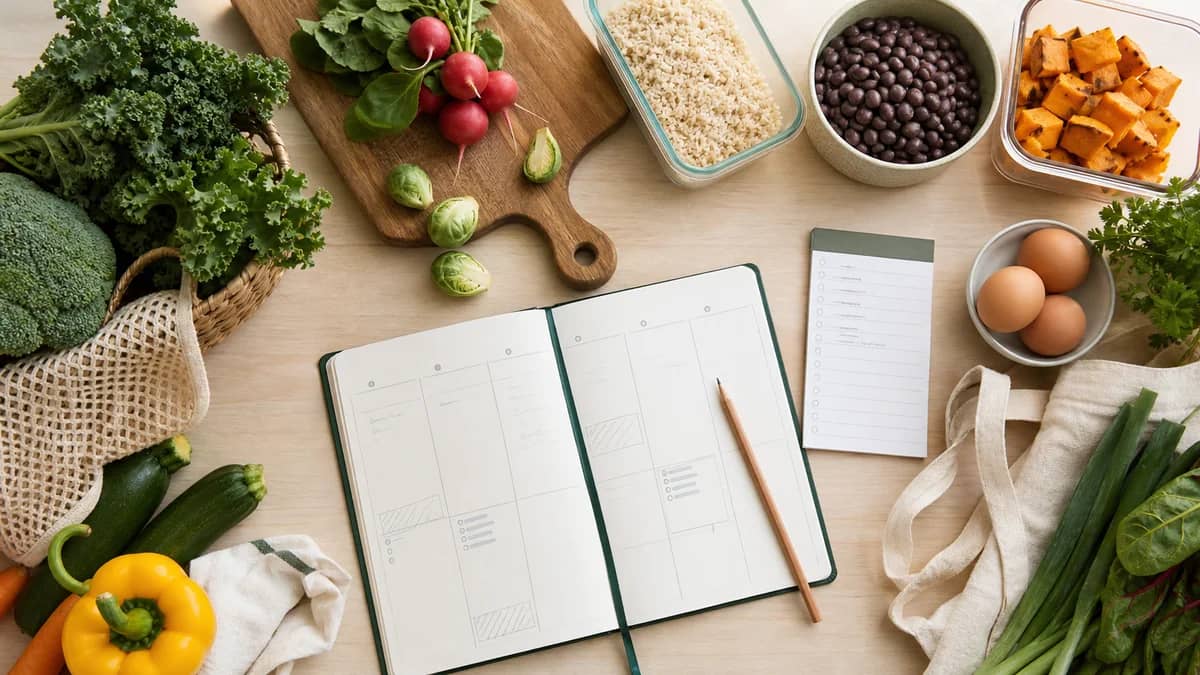
Meal planning often fails because it is treated as a promise to cook seven perfect dinners. A more useful plan is a small decision system: check what needs using, choose a few flexible meals, leave space for real life, and decide in advance what will happen to leftovers.
Step 1: shop your kitchen first
Before writing a menu, look through the refrigerator, freezer, and pantry. Put foods that should be used soon at the top of your list. A half bag of spinach, opened yogurt, ripe tomatoes, or cooked rice is not a problem to hide at the back—it is the beginning of your plan.
Step 2: plan only the meals you will actually eat at home
Count the evenings when you expect to cook. Subtract meals out, late workdays, social plans, and one night for leftovers or a freezer meal. For many households, planning three or four main meals is more realistic than planning seven. The U.S. Environmental Protection Agency specifically recommends basing the shopping list on how many meals will be eaten at home.
Step 3: choose meals with shared ingredients
Shared ingredients reduce the number of items you must buy and make it easier to use a whole package. Roast vegetables can become a side dish, a grain-bowl topping, and a filling for wraps. A pot of beans can serve with rice, go into a soup, and become a sandwich filling. Shared ingredients are useful; identical meals every day are not required.
Step 4: give every perishable item a job
Use-first: delicate produce, opened dairy, cooked leftovers, and anything close to its safe storage limit.
Use-later: sturdy vegetables, unopened items, dried staples, and ingredients intended for later in the week.
Freeze-now: bread, cooked grains, meat, ripe fruit, or portions you know you will not use in time.

Keep reading
Simple Healthy Snacks That Actually Beat Reaching for Junk Food
Step 5: write quantities, not just ingredients
“Tomatoes” is vague. “Six tomatoes: four for curry and two for sandwiches” is a plan. Quantities help you notice when a large package is not really a bargain. Keep a running list on paper or your phone and group it by produce, chilled foods, pantry, and household items so the shop is faster.
Step 6: schedule a leftover checkpoint
Choose one day to review cooked food and opened ingredients. Eat, freeze, or safely repurpose what remains. Clear containers and simple date labels make this easier. Use reliable storage guidance rather than smell alone when deciding whether a perishable food is safe.
A realistic example
Monday: lentil curry, rice, and vegetables; cook extra rice and lentils.
Tuesday: vegetable fried rice with egg or tofu.
Wednesday: wraps using leftover lentils, salad, and yogurt sauce.
Thursday: flexible night—leftovers, freezer food, or a simple omelette.
Friday: soup or pasta using remaining vegetables.
A good meal plan removes decisions without removing flexibility.
Improve the system, not your willpower
At the end of the week, notice what was repeatedly ignored, overbought, or difficult to prepare. Buy a smaller amount next time or choose a more convenient form. The best plan is not the most impressive one; it is the one that helps your household eat what it buys.
Reference notes
Sources and further reading
Our editorial promise
Prepared with clarity and care.
This guide completed our editorial review before publishing. If something needs attention, report a correction or contact the publisher.
About this article
- Published:
- Last updated:
- Author:
- Ceyora Editorial Team
- Review status:
- Editorially reviewed
- Sources:
- 2
- Corrections:
- Report an issue