

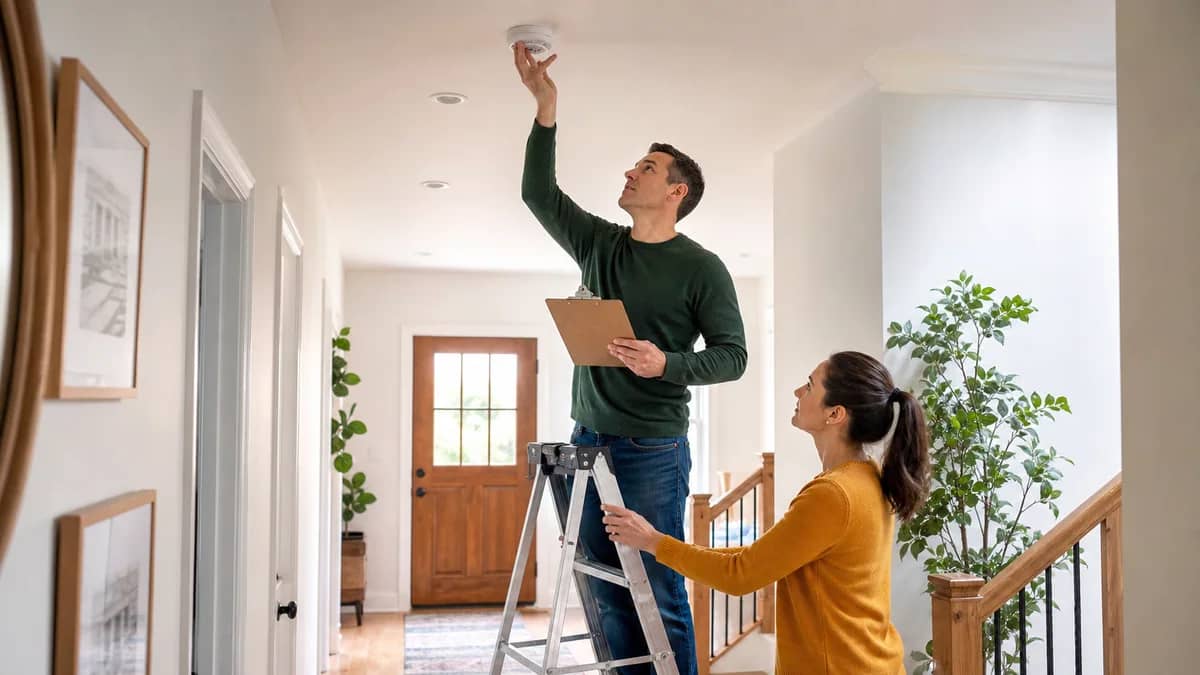
Home safety is easier to manage as a short routine than as a response to a crisis. Once a month, walk through your home with this checklist. Record anything that needs attention, assign an owner and date, and contact a qualified professional when a task involves electricity, gas, structural work, or specialist equipment.
1. Test alarms and review escape routes
Test each smoke alarm using the manufacturer’s instructions.
Confirm alarms have not been removed, covered, or disabled.
Keep hallways, doors, stairs, and planned exits clear.
Make sure everyone knows how to leave and where to meet outside.
The U.S. Fire Administration advises testing smoke alarms monthly and placing them inside and outside sleeping areas and on every level of a home. Replacement schedules vary by alarm type, so check the label and instructions; many smoke alarms need replacement after ten years.
2. Look for electrical and heat risks
Replace damaged cords and stop using plugs or outlets that are hot, scorched, loose, or sparking.
Avoid running cords under rugs or pinching them behind furniture.
Keep portable heaters away from curtains, bedding, and other combustible materials.
Do not overload adapters or extension leads; ask an electrician about recurring capacity problems.
3. Check water, damp, and trip hazards
Look under sinks, around toilets, near appliances, and below visible pipes for drips, staining, or damp smells. Early repair can reduce damage and mould growth. Secure loose rugs, improve lighting on stairs, and move cables, toys, or stored items out of common walking paths.
4. Secure medicines and hazardous products

Keep reading
A Simple System for Organizing Important Household Documents
Store medicines, cleaning products, pesticides, batteries, and sharp tools away from children and pets.
Keep products in their original labelled containers.
Review expired or unwanted medicines and use an approved local disposal route.
Never mix household chemicals unless the label explicitly instructs you to do so.
5. Review kitchen safety
Keep cooking areas free from paper, cloth, and grease build-up. Check that pan handles do not extend over the edge of the stove. Store knives securely. Know how to cut power or gas only if your system’s instructions and local guidance allow it; otherwise contact the responsible provider or a qualified professional.
6. Check your emergency basics
Confirm important phone numbers and household contacts are current.
Charge power banks and test torches; replace weak batteries.
Review essential water, food, medication, and first-aid supplies for your local risks.
Include the needs of children, older adults, disabled household members, and pets.
7. Make one repair decision
A checklist is not complete when a problem is noticed; it is complete when the next action is clear. Fix a simple low-risk issue immediately, or write down who will handle it and by when. Take a photo if it will help a landlord, technician, or insurer understand the problem.
The purpose of a monthly check is not to prove that a home is risk-free. It is to notice change early and make the next safe action obvious.
Keep the routine calm and repeatable
Choose the same date each month and keep a one-page record. Add checks required by your country, building, climate, equipment, landlord, or insurer. A short routine performed regularly is more protective than a long checklist that stays in a drawer.
Reference notes
Sources and further reading
Our editorial promise
Prepared with clarity and care.
This guide completed our editorial review before publishing. If something needs attention, report a correction or contact the publisher.
About this article
- Published:
- Last updated:
- Author:
- Ceyora Editorial Team
- Review status:
- Editorially reviewed
- Sources:
- 2
- Corrections:
- Report an issue